


- 2026-09-30
- The Invisible Skeleton of Fiber Optic Connectors: Why "Proper Crimping" is the Lifeblood of Patch Cord Reliability
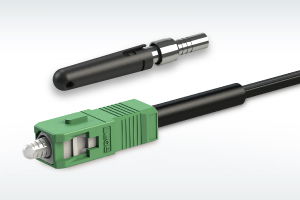
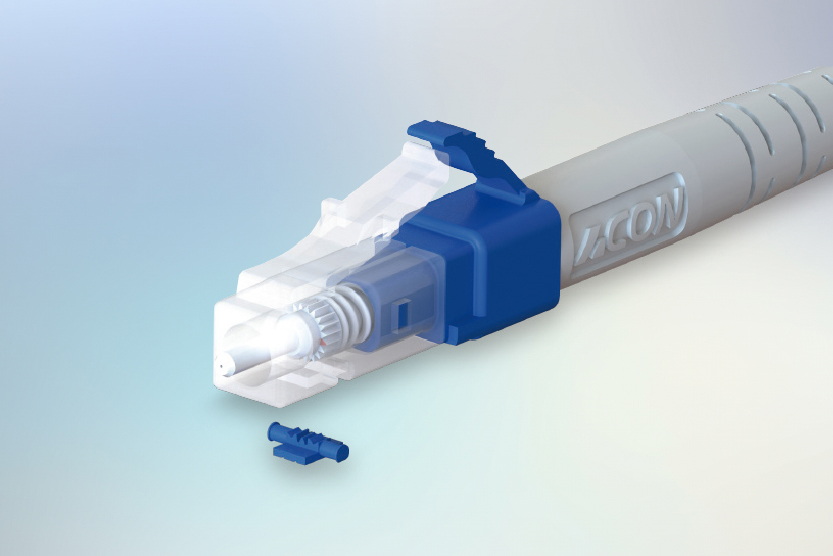
- During the manufacturing of fiber optic connectors and patch cords, attention is predominantly focused on end-face polishing precision and ferrule geometry (measured via 3D interferometers). However, in practical deployment and long-term operations and maintenance (O&M), whether a fiber patch cord will suffer damage when subjected to pulling, bending, and its own deadweight depends entirely on the quality of the crimping process.… Continue reading →
- 2026-09-30
- The Guardian of Optical Polarization: Polarization-Maintaining Fiber (PM Fiber) Operating Principles and Advanced Applications
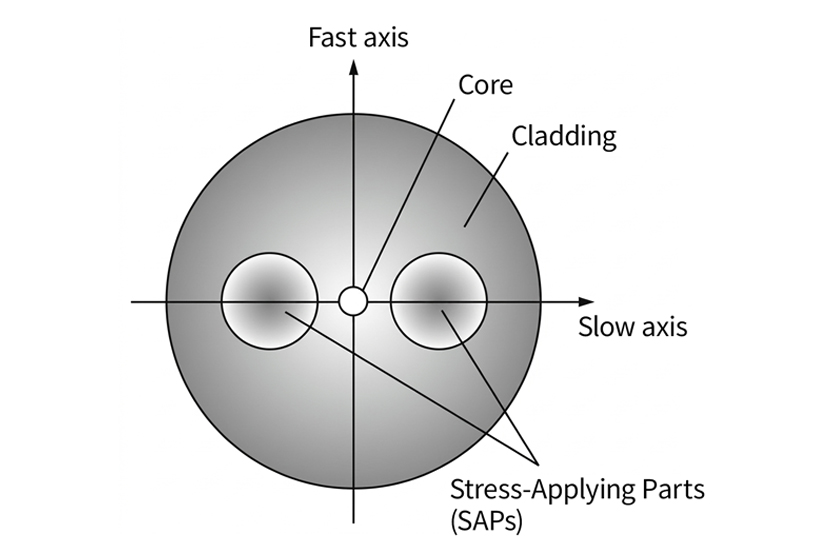
- In standard Single-Mode Fiber (SMF), when optical signals propagate through the glass core, their State of Polarization (SOP) is extremely susceptible to random drift caused by environmental temperature fluctuations, mechanical bending, and vibrations. However, in fields such as coherent optical communication, silicon photonics, External Laser Sources (ELS) for Co-Packaged Optics (CPO), and high-precision optical sensing, optical systems impose rigorous physical requirements on the stability of the optical polarization state. Polarization-Maintaining Fiber (PM Fiber) is a specialized optical fiber engineered specifically to overcome polarization degradation.… Continue reading →
- 2026-09-30
- Micron-Level Alignment Limits: Why "Ferrule Concentricity" is the Lifeblood of Fiber Optic Connector Performance
- In fiber optic communication networks, optical signal coupling between two fibers does not rely on electrical continuity, but strictly depends on physical end-face alignment governed by physical optics. Across all optical connector structures (such as LC, SC, FC, and MPO guide pins), the zirconia ceramic ferrule serves as the core mechanical skeleton that anchors and precisely aligns optical fibers.… Continue reading →

- 2026-08-24
- FTTH (Fiber to the Home) Concepts, Advantages, and Deployment Architecture Analysis
- Driven by the advent of the 400G/800G data center and AI computing era, bandwidth demand in access networks is experiencing explosive growth. As the optimal solution for the "Last Mile," FTTH (Fiber to the Home) has become the core architecture for global telecom operators building next-generation broadband networks. … Continue reading →

- 2026-08-24
- Comprehensive Analysis of PON Architecture, Working Principles, and Technical Evolution
- In FTTH (Fiber to the Home) architecture, PON (Passive Optical Network) is currently the most widely deployed and highly efficient optical transmission technology. Utilizing a Point-to-Multipoint (P2MP) topology, telecom operators can deliver high-speed broadband access to vast user bases while minimizing equipment and operational costs.… Continue reading →
- 2026-08-24
- The Soul of Fiber Optic Health Inspection: OTDR (Optical Time Domain Reflectometer) Operating Principles and Applications
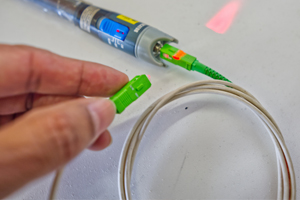
- In fiber optic network construction acceptance and maintenance management, an OTDR (Optical Time Domain Reflectometer) acts as the "ultrasound scanner" or "radar" of optical fibers, capable of precisely mapping the health status of every node along the fiber link.… Continue reading →
- 2026-07-27
- Confronting Extreme High Density: What is Bend-Insensitive Fiber?
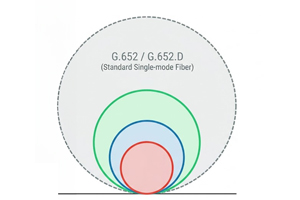
- Driven by the comprehensive data center upgrades to 800G/1.6T and CPO (Co-Packaged Optics), optical cabling and routing are moving toward extreme miniaturization and ultra-high density. When massive amounts of optical fibers are squeezed into extremely confined spaces (such as inside chassis enclosures or behind BTW panels) or within high-density cables, the fibers face severe physical stress. To achieve compact routing without sacrificing signal quality, "Bend-Insensitive Fiber" (BIF) has become a critical material for next-generation networks.… Continue reading →
- 2026-07-27
- The Micron-Scale Key: Why Fiber End-Face Cleaning is the Lifeblood of High-Performance Networks?
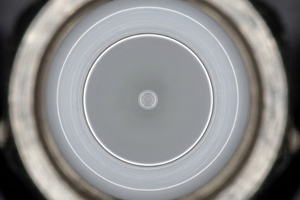
- In the ultra-high-speed era of data centers upgrading to 400G / 800G and CPO (Co-Packaged Optics), over 85% of physical layer failures originate from "fiber end-face contamination." A single speck of dust invisible to the naked eye is enough to paralyze an entire expensive backbone network.… Continue reading →
- 2026-07-27
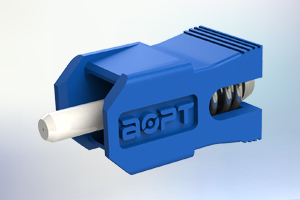
- The Golden Combination of Robustness and Precision Alignment: LC Connectors and PEI Materials
- In ultra-high-density optical communications, PEI (Polyetherimide, such as Sabic ULTEM™) engineering plastic used for LC connector housings is the core key to ensuring micron-level alignment and long-term stability.… Continue reading →


