


Why Connector Miniaturization for BTW Applications is the Trend
2026-05-31
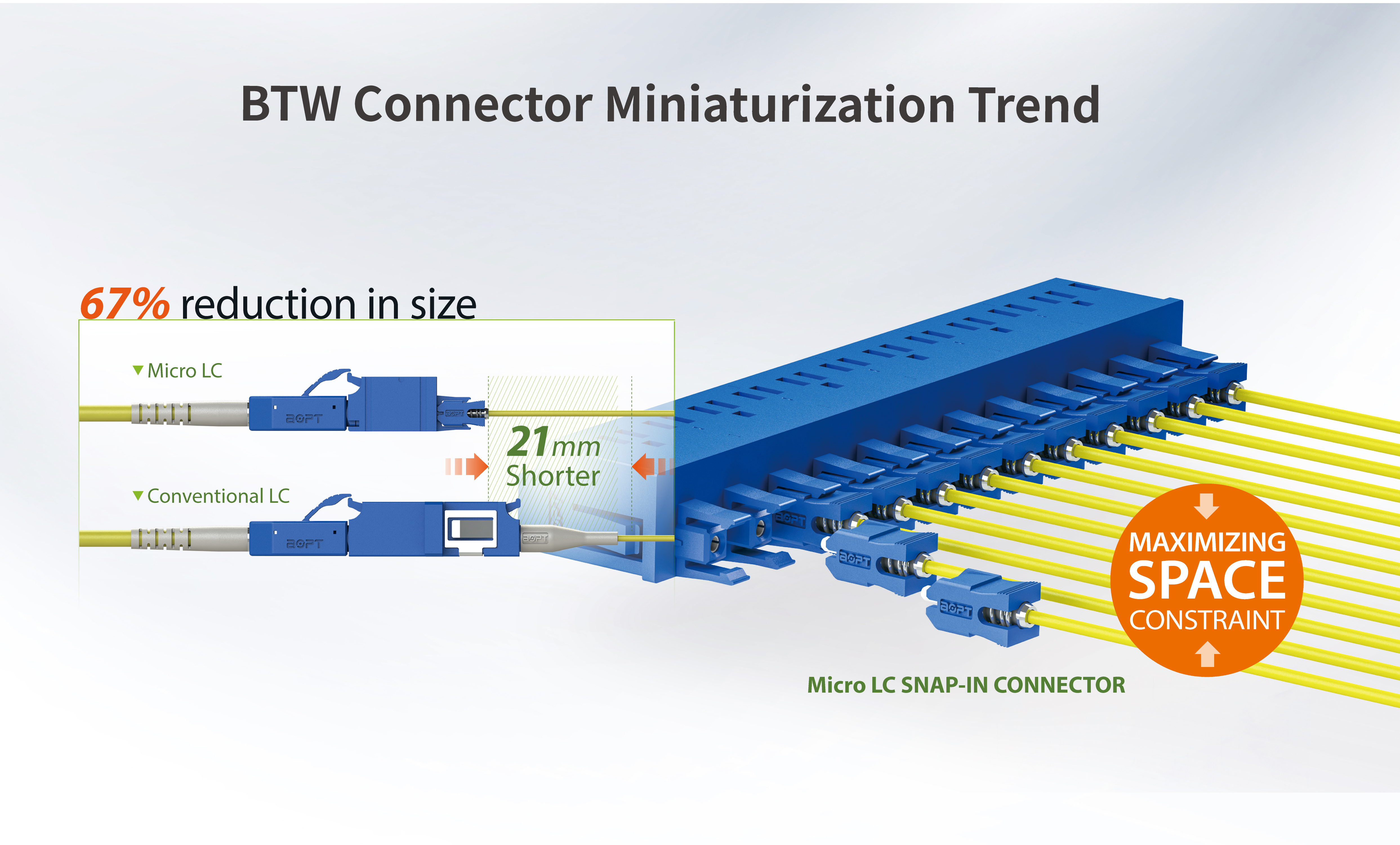
As transmission speeds accelerate to 800G and 1.6T, internal chassis space and thermal management face severe constraints. Consequently, connector miniaturization and BTW (Behind-the-Wall) internal routing have become essential design trends.
What is a BTW Application?
While the front panel handles external patch cables, the area inside the chassis right behind the panel is the BTW zone. Positioned adjacent to hot ASICs and optical engines, this area demands strict spatial efficiency and thermal control.
3 Key Drivers for Miniaturization:
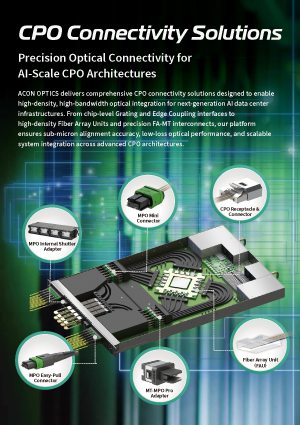
1. Space Optimization: Miniaturized connectors (e.g., MT, MMC, SN) cut footprints significantly, allowing hardware architects to route massive fiber counts from CPO engines within confined BTW spaces.
2. Improved Airflow & Cooling: Bulky legacy connectors block internal airflow. Miniaturized components minimize wind resistance, optimizing chassis heat dissipation for stable 800G+ operations.
3. Flexible Internal Routing: Mini BTW connectors enable modular internal breakouts, streamlining factory assembly and simplifying field maintenance.